

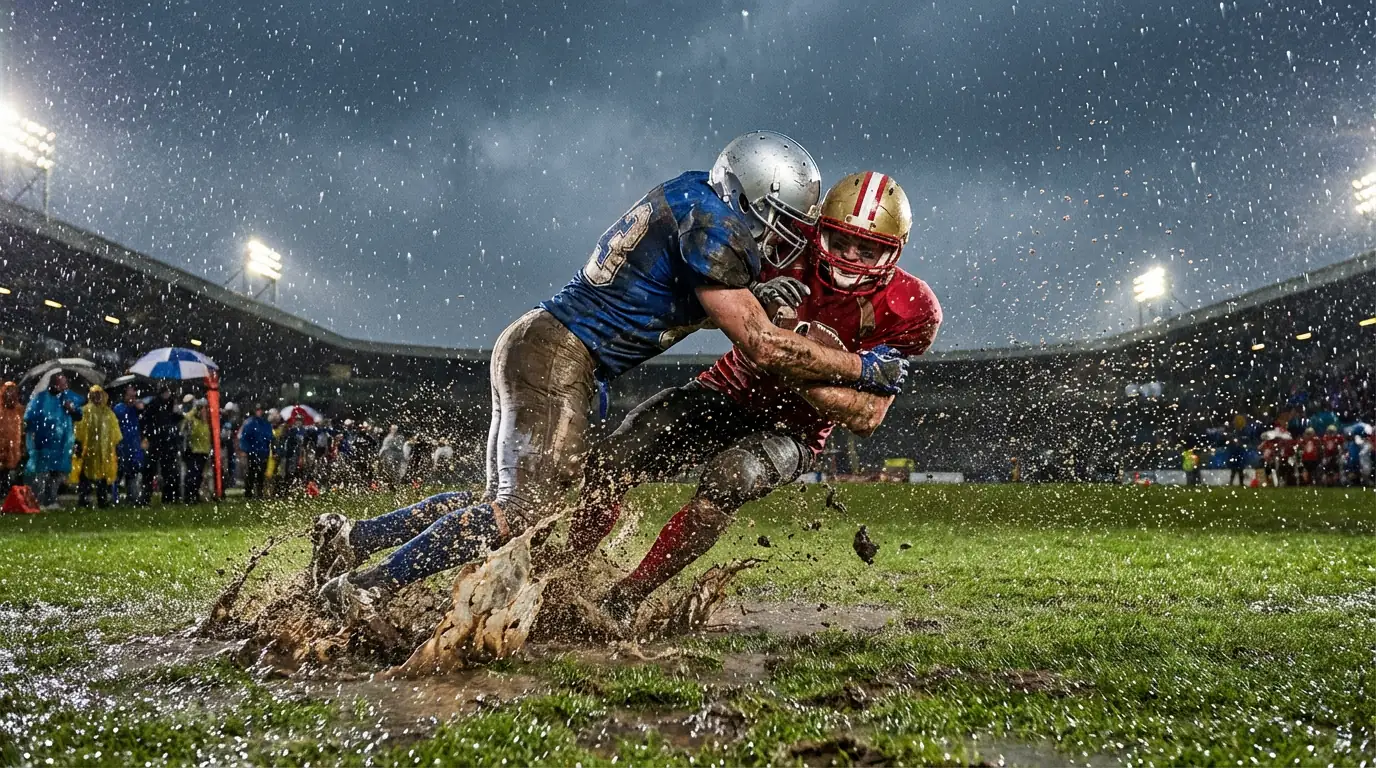
Weather is the variable that every bettor sees but most ignore. The forecast calls for 25 mph winds and rain, and the bettor shrugs — “it’s the same for both teams” — and places the same wager they would have placed in a dome. This reasoning is seductive and wrong. Weather affects both teams, yes, but it does not affect both teams equally. It changes the style of play, the type of scoring, and the range of likely outcomes in ways that are quantifiable and exploitable.
Football is an outdoor sport played across a wide range of climates and conditions. An NFL game in Green Bay in December is a fundamentally different event from the same matchup played in a dome in September. A Premier League match on a waterlogged pitch in February bears little resemblance to the same fixture on a dry surface in August. The sportsbook adjusts for extreme weather to some degree, but the adjustment is frequently insufficient — particularly for secondary effects that are harder to model.
The Impact of Wind on Scoring
Wind is the weather variable with the most significant and well-documented impact on football scoring, particularly in American football where the passing game is the primary offensive weapon.
Sustained winds above 15 mph begin to noticeably affect passing accuracy and distance. Quarterbacks underthrow deep balls, spiral quality deteriorates, and receivers have more difficulty tracking the ball in flight. At 20 mph and above, the passing game is materially compromised. Long field goals become unreliable — a 50-yard attempt in calm conditions might be makeable, but the same kick into a 25 mph headwind is a coin flip at best.
The impact on scoring is measurable. Studies of NFL games played in winds above 20 mph consistently show a reduction of 3 to 6 points in total scoring compared to games played in calm conditions. This effect is large enough to move the expected total below the posted number in many cases, yet the market’s adjustment is often only 1 to 2 points. The gap between the actual impact and the market adjustment is where the value lives.
For bettors, wind creates a systematic lean toward the under in totals markets. It also favors teams that run the ball effectively over teams that rely on the pass, because the rushing game is unaffected by wind while the passing game is degraded. A team with a strong running attack facing a pass-heavy opponent in 25 mph winds has a concrete, weather-driven edge that extends beyond their baseline matchup advantage.
In soccer, wind affects the game differently but still meaningfully. Strong crosswinds can push crosses and long balls off target, reducing the effectiveness of wide-play attacking strategies. Headwinds make it harder for goalkeepers to distribute the ball accurately over long distances, occasionally leading to turnovers that create chances. Teams that play a short-passing, ground-based style are less affected by wind than teams that rely on long balls and aerial play.
Rain: Slippery Surfaces and Sloppy Play
Rain affects football primarily through its impact on the playing surface. A wet pitch changes how the ball moves, how players cut and accelerate, and how reliable passing and catching become.
In the NFL, rain correlates with increased fumble rates. Wet footballs are harder to grip, and ball carriers who might otherwise secure a ball after a hit are more likely to lose it on a slick surface. The effect on passing is less dramatic than wind but still present — wet balls are slightly harder to throw with precision, and receivers are more likely to drop catchable passes on rain-slicked routes. The combined effect typically reduces total scoring by 2 to 4 points in heavy rain games.
On soccer pitches, rain creates a faster surface that can benefit teams with quick, incisive passing. The ball skids along a wet pitch, accelerating ground passes and making it harder for defenders to read the speed of the ball. However, heavy rain can also make the pitch soft and uneven, particularly on grounds with poor drainage, turning the match into a physical contest where skill advantages diminish. The net effect on scoring depends on the pitch quality, the intensity of the rain, and how each team’s style interacts with the conditions.
For betting purposes, heavy rain in the NFL is an under indicator similar to wind, though somewhat less reliable. In soccer, the effect is more nuanced — light rain on a well-maintained pitch might not affect scoring at all, while a downpour on a poor surface could significantly suppress the quality of play. The bettor’s task is to assess the specific conditions rather than applying a blanket rule.
Snow and Extreme Cold
Snow games are among the most visually dramatic events in the NFL, and they carry distinct betting implications that differ from rain or wind.
Light snow — the kind that dusts the field but does not accumulate significantly — has minimal impact on play. The ball remains manageable, the footing is adequate, and the passing game functions close to normal. Heavy snow that accumulates on the field is another matter entirely. Thick snow slows receivers, disrupts route running, obscures yard markers for officials, and makes the kicking game unreliable. Games played in heavy snow tend to be low-scoring, run-heavy affairs that look nothing like the teams’ typical performance.
The challenge for bettors is that snow forecasts are imprecise. A prediction of “snow showers” might produce a light dusting that barely affects the game, or it might produce steady accumulation that transforms the playing surface. The market cannot price snowfall intensity precisely because the forecast itself is uncertain, and this uncertainty sometimes works in the bettor’s favor — if you monitor updated weather reports closer to kickoff than the sportsbook adjusts its lines, you can capture value on totals and team-specific markets.
Extreme cold — temperatures below 15°F — affects player performance in subtle ways that accumulate over 60 minutes. Hands stiffen, making catching and ball security harder. Muscles tighten, increasing the risk of dropped passes and missed tackles. The impact on scoring is modest compared to wind or heavy snow but still measurable, particularly in the second half as fatigue compounds the cold’s effects.
In soccer, snow and extreme cold are less common variables because most top leagues play in temperate climates or suspend matches in unsafe conditions. However, Scandinavian leagues, Eastern European competitions, and early-round domestic cup ties in northern countries occasionally feature genuinely cold or snowy conditions that affect the match dynamics.
Heat and Its Underrated Effects
While cold and wind dominate the weather conversation in American football, heat is the more relevant factor in soccer — particularly in summer competitions, early-season matches, and tournaments held in warm climates.
High temperatures — above 30°C or 86°F — reduce player work rates, especially in the second half. Teams that press intensely and cover large distances tire faster in heat, and the drop-off in pressing intensity after the 60th minute is measurable in tracking data. This has direct implications for second-half scoring patterns: teams that rely on late-game energy to create chances may produce fewer opportunities, while teams that conserve energy and attack efficiently benefit from opponents tiring around them.
The 2022 World Cup in Qatar and various summer tournaments have provided data on heat’s impact on match dynamics. Research indicates that total distance covered decreases by 2-4% in matches played above 30°C compared to those played in moderate temperatures. Sprint frequency declines even more sharply, particularly in the final 20 minutes. For bettors, this suggests that second-half unders and late-game unders may offer value in hot-weather matches, especially when the teams involved are accustomed to cooler climates.
Hydration breaks, which are mandated in extreme heat, also affect match rhythm. The interruptions give coaches a chance to regroup and reorganize, potentially reducing the chaos and open play that produces goals. The effect is small but real, and it tilts the probability distribution slightly toward lower-scoring outcomes.
Adjusting Your Bets for Weather: A Data-Driven Approach
Casual bettors react to weather with gut feelings — “it’s windy, so I’ll take the under” — which is directionally correct but imprecise. A systematic approach to weather adjustment produces better results because it quantifies the expected impact rather than guessing at it.
The core of a weather-adjusted model is simple: establish a baseline expectation for the match (using power ratings, xG data, or a statistical model), then apply a weather adjustment based on historical data. If your baseline model projects a total of 46 points for an NFL game and historical data shows that games played in 20+ mph winds average 4 points fewer than calm-weather games, your adjusted total is 42. If the sportsbook’s posted total is 44, the under has value.
The same framework applies to spreads and team-level markets. If wind reduces passing efficiency and Team A relies on the pass while Team B runs the ball, the weather favors Team B. If your baseline spread is Team A -3 but the wind adjustment moves it to Team A -1, and the sportsbook still has Team A -3, the underdog side has weather-driven value.
Weather data for upcoming NFL games is available from multiple sources including the National Weather Service and specialized sports-weather services. Checking the forecast is a two-minute task that can shift your view on a game’s total or spread by several points.
The Forecast Nobody Reads
Weather is the most accessible edge in football betting because the information is free, the impact is documented, and most bettors do not bother to check it. Every outdoor game has a weather forecast. Every forecast contains information that affects scoring probability. And yet the majority of bettors place their wagers without glancing at the weather report, effectively leaving money on the table because they were too lazy to open a second browser tab.
The edge from weather analysis is not large on any single game. It is a 1-2 point adjustment on the total, a half-point lean on the spread. But compounded across a full season of outdoor games, those small adjustments add up to a meaningful improvement in results. The bettor who checks the weather is not smarter than the one who does not — they are just more thorough, and in a game decided by margins, thoroughness is its own kind of intelligence.
