

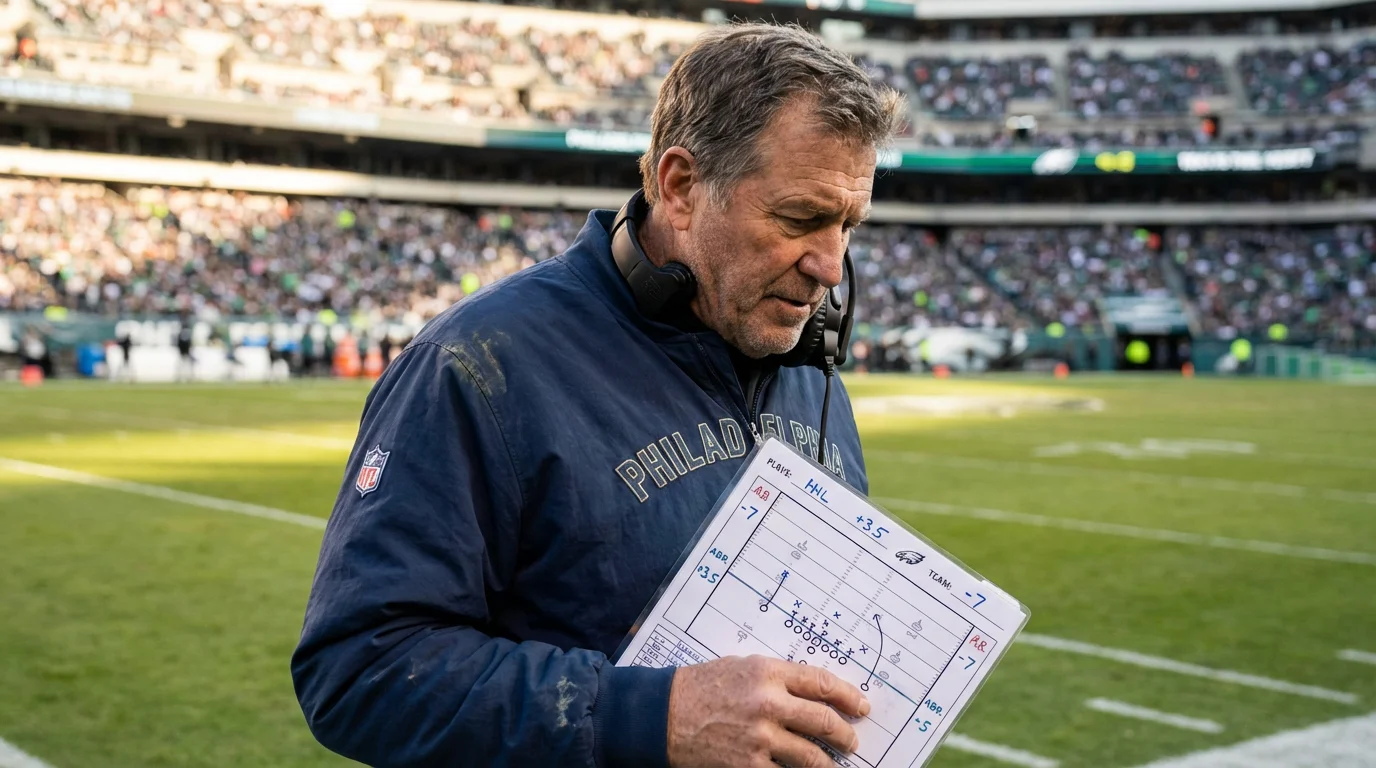
A teaser is a bet that lets you cheat — a little. You take a point spread or total and move the number in your favor by a fixed amount, making it easier to win. The catch is that you have to combine at least two selections, and the adjusted odds are worse than a standard parlay because the sportsbook knows you just made the bet easier. It is a structured trade: you give up potential payout in exchange for a more comfortable number.
Teasers are one of the most misunderstood bet types in football. Casual bettors love them because the adjusted spreads feel safe. Sharp bettors largely avoid them — except in very specific situations where the math is genuinely favorable. The difference between those two approaches is the difference between using teasers as a comfort blanket and using them as a precision tool, and that difference determines whether teasers drain your bankroll or quietly add to it.
Mechanics of Football Teaser Bets
A teaser combines two or more point spread or total selections into a single bet, with each selection adjusted by a fixed number of points in the bettor’s favor. In the NFL, the standard teaser adjustments are 6, 6.5, and 7 points. Some sportsbooks also offer 10-point and 13-point teasers, though the payouts on those are so reduced that they are rarely worth considering.
If the original spread on a game is Kansas City -7 and you take a 6-point teaser, your adjusted spread becomes Kansas City -1. If the original spread on a second game is Buffalo +3 and you tease it 6 points, your adjusted line becomes Buffalo +9. Both legs must cover their teased spreads for the bet to pay out. If either leg loses, the entire teaser loses.
The payout on a standard two-team, 6-point NFL teaser is typically -110 to -120 at most sportsbooks. Compare this to a two-team parlay at standard -110 odds on both legs, which pays roughly +260. The massive reduction in payout reflects the massive increase in win probability from moving each spread by 6 points. You are converting difficult bets into easier ones, and the sportsbook compensates by giving you a fraction of the parlay payout.
Teasers can also be applied to totals. If the total on a game is 44 and you tease the over by 6 points, your adjusted total becomes 38 — meaning the combined score only needs to reach 39 for your over to hit. Teasing totals is less common than teasing spreads because the key-number dynamics that make spread teasers valuable are less pronounced in totals markets.
The 6-Point Teaser and NFL Key Numbers
The standard 6-point teaser in the NFL is not just a random adjustment — it is calibrated around the sport’s scoring structure, and this is where teasers become genuinely interesting from an analytical perspective.
The two most important key numbers in the NFL are 3 and 7. A huge proportion of games are decided by exactly 3 points (a field goal) or exactly 7 points (a touchdown plus extra point). When you tease a spread by 6 points, you are moving the line through both of these key numbers in many common scenarios.
Consider a favorite at -7.5. A straight bet requires them to win by 8 or more. Tease it 6 points and the adjusted spread is -1.5 — they just need to win by 2. That 6-point adjustment moved the line through 7 (the touchdown key number) and through 3 (the field goal key number). Every game that the favorite wins by 2, 3, 4, 5, 6, or 7 points is now a teaser win instead of a straight-bet loss. The probability improvement is enormous.
The same logic works in reverse for underdogs. An underdog at +1.5 teased by 6 points becomes +7.5. Now they can lose by up to 7 points and you still win. The tease moved through 3 and 7 again, capturing the highest-frequency margins of defeat.
This is why not all teasers are equal. A teaser that moves a line from -8 to -2 crosses both 7 and 3 — maximum value. A teaser that moves a line from -4 to +2 crosses 3 but not 7 — less value. A teaser that moves a line from -13 to -7 crosses 10 but only touches 7 — even less value because 10 is a less common margin than 3. The value of a teaser depends entirely on which key numbers the adjustment crosses.
The 7-Point Teaser
A 7-point teaser gives you one additional point of adjustment compared to the standard 6-pointer. The payout is further reduced — typically around -130 to -140 for a two-team teaser — but the extra point can be significant when it moves you cleanly through an additional key number.
The 7-point teaser is particularly valuable when it moves a line from one side of 7 to the other side of 3, or vice versa. A favorite at -9 teased by 7 points becomes -2. That adjustment crosses 7 and 3, landing on the favorable side of both. The same line teased by only 6 points becomes -3, which sits directly on the field-goal key number — a push rather than a win if the favorite wins by exactly 3. That extra point turns a push into a win, and over hundreds of teasers, the difference is material.
However, the 7-point teaser’s higher price (-130 versus -110) means it needs a higher win probability to break even. A two-team teaser at -110 breaks even at approximately 72.4% per leg. At -130, the breakeven rises to roughly 75.2%. The question is always whether the additional point of adjustment generates enough additional win probability to justify the higher price, and the answer depends on the specific numbers involved.
The Wong Teaser Strategy
The Wong teaser, named after Stanford Wong who popularized the approach, is the most well-known teaser strategy and the one with the strongest historical track record. The core principle is simple: only tease lines that cross through both 3 and 7.
In practice, this means restricting your teasers to a narrow set of qualifying lines. For favorites, you want original spreads of -7.5, -8, or -8.5 (which tease down through 7 and 3). For underdogs, you want original spreads of +1.5, +2, or +2.5 (which tease up through 3 and 7). These are the “Wong windows” — the specific ranges where a 6-point tease captures the maximum key-number value.
Historical data from the NFL has shown that two-team teasers built exclusively from Wong-qualifying legs have a win rate that exceeds the breakeven threshold at standard pricing. The exact numbers vary by study period, but win rates in the 73-76% per leg range have been documented across multiple decades of NFL data. At -110 pricing, where the breakeven is approximately 72.4% per leg, this produces a positive expected value.
The discipline required to execute the Wong strategy is its biggest practical hurdle. On any given NFL Sunday, there might be only two or three games with lines in the Wong windows. If fewer than two qualify, you cannot build a teaser that week. Bettors who lack the patience to wait for qualifying lines and start teasing non-optimal numbers quickly erode the strategy’s edge. The Wong teaser works specifically because it is selective. Diluting the selection criteria turns a +EV strategy into a -EV one.
It is also worth noting that the betting market has become aware of the Wong strategy over the past decade. Sportsbooks have responded by adjusting their teaser pricing and rules — some have moved standard pricing from -110 to -120 for two-team teasers, and others have added rules where ties lose rather than push. These adjustments narrow the edge but have not eliminated it entirely, particularly at sportsbooks that still offer -110 pricing with push rules.
When Teasers Offer Better Expected Value Than Straight Bets
Teasers are not always better or always worse than straight bets — the comparison depends on the specific numbers involved. Understanding when to tease and when to bet straight is a skill that separates informed bettors from those who use teasers indiscriminately.
The fundamental question is whether the teaser’s adjusted probability of winning exceeds the breakeven probability at the teaser’s price. A two-team teaser at -110 needs each leg to win approximately 72.4% of the time. If teasing a specific spread from -7.5 to -1.5 raises your estimated win probability from 52% to 78%, the teased version is clearly superior — you are exceeding the breakeven by a comfortable margin.
Conversely, teasing a spread from -2.5 to +3.5 might raise your win probability from 54% to only 69%. The adjustment moves through 3 (good) but does not cross 7, and the improvement is insufficient to exceed the 72.4% breakeven. In this case, the straight bet at -110 with a 54% win probability offers better expected value.
The general rule: teasers are most valuable when the adjustment crosses the most impactful key numbers relative to the starting spread. They are least valuable when the starting spread is already in a favorable position (like +3.5) and the teased number moves into less meaningful territory (like +9.5). Not every spread benefits equally from being teased, and the bettor who evaluates each leg individually — rather than tossing every interesting game into a teaser — will outperform the one who treats teasers as a blanket strategy.
College football teasers deserve a brief mention. The scoring distribution in college football differs from the NFL — blowouts are more common, and key numbers are less concentrated around 3 and 7 because the extra-point rate is different and two-point conversions are more frequent. The Wong strategy was developed for the NFL, and applying it directly to college football without adjustment produces weaker results. Some bettors have developed college-specific teaser strategies, but the evidence base is thinner and the edge is less clearly documented.
The Teaser Paradox
Teasers sit in an unusual position in the betting ecosystem. They are simultaneously one of the most popular bet types among recreational bettors and one of the most dismissed by professionals. The recreational appeal is obvious — who does not want easier numbers? The professional skepticism is equally understandable — why accept drastically reduced payouts for incrementally better win probabilities?
The resolution of this paradox is that both sides are partly right. Most teasers, placed on random lines at standard or inflated pricing, are -EV bets that slowly drain bankrolls. But a specific subset of teasers — those built from Wong-qualifying lines, priced at -110 or better, with push rules intact — have demonstrated a persistent positive edge across decades of NFL data. The tool itself is neutral. The value comes from how selectively and precisely you wield it.
If you bet teasers, bet them like a surgeon: specific lines, specific conditions, no exceptions. If you cannot find qualifying legs on a given week, do not force it. The week you start teasing lines outside the optimal windows is the week the strategy stops working. The math does not negotiate, and neither should you.
