

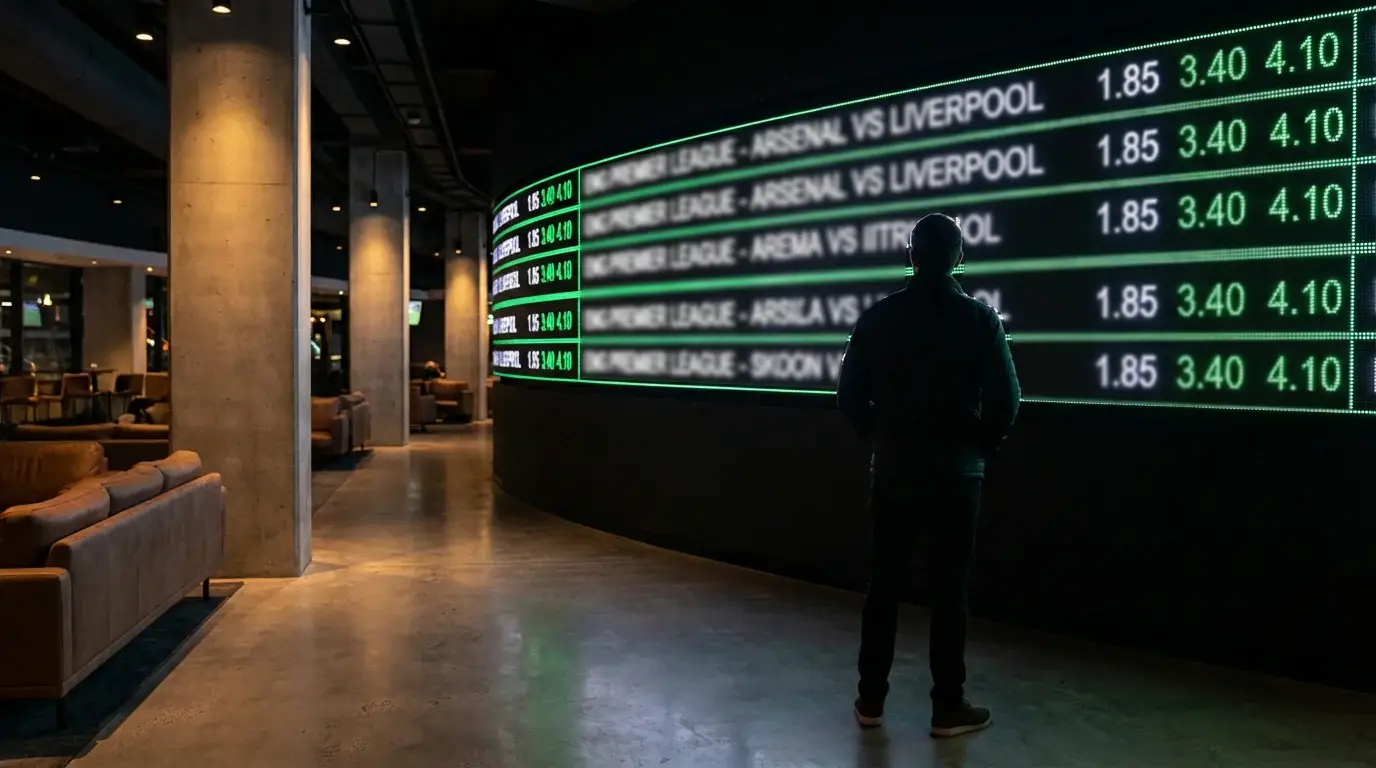
The number on the board is not static. From the moment a sportsbook posts an opening line to the second before kickoff, the odds are shifting — sometimes gradually, sometimes sharply. These movements are not arbitrary. They are signals, and learning to read them is one of the most valuable skills a football bettor can develop.
Line movement tells you what other bettors think, what the sportsbook is adjusting for, and where the smart money is landing. It does not give you the answer to who will cover the spread or whether the total will go over, but it tells you what the market — a collective intelligence composed of thousands of informed and uninformed opinions — believes. Understanding that belief, and knowing when to follow it and when to fade it, is a significant edge.
How Opening Betting Lines Are Set
An opening line is the sportsbook’s first published price for a game. In the NFL, opening lines typically appear on Sunday evening for the following week’s slate. In soccer, opening lines for weekend matches might appear early in the week.
The opening line is based on the sportsbook’s internal power ratings, statistical models, and historical data. It represents the book’s best initial estimate of the fair spread, total, or moneyline for the match. But crucially, it is not intended to be perfect — it is intended to be a starting point that invites action from both sides.
Some sportsbooks are known as “market-making” books. They post lines first, accept large wagers from sharp bettors, and adjust rapidly based on the action they receive. Other sportsbooks wait for the market-makers to establish lines and then copy or shade those numbers before opening their own markets. This hierarchy matters because the opening line at a market-making book is the raw, unrefined estimate, while the opening line at a follower book has already been filtered through initial sharp action.
The window between the opening line and the first significant move is when the most value is typically available. If the market-maker opens a line and sharp bettors immediately pound one side, the line moves quickly to correct the error. Bettors who have done their own analysis and reached the same conclusion as the sharps can capture value by acting during this brief window — often a matter of hours or less.
Identifying Sharp Money Movements
Not all line movements are created equal. Some are driven by sharp bettors — professionals and syndicates who bet large amounts based on sophisticated models. Others are driven by the general public, who bet smaller amounts based on team loyalty, media narratives, and gut feelings. The sportsbook responds to both, but the movements they produce have different implications.
Sharp money typically moves the line with relatively low ticket volume. A syndicate might place a single $20,000 bet on one side, and the sportsbook moves the line immediately because it recognizes the source as informed. Public money, by contrast, moves the line through sheer volume — thousands of small bets accumulating on one side until the sportsbook adjusts to balance its exposure.
The distinction is visible in the relationship between ticket percentage and money percentage. If 70% of the tickets are on one side but the line has moved in favor of the other side, sharp money is likely responsible. The book is saying, in effect, that the 30% of tickets on the unpopular side represent a larger total dollar amount — because those bets came from bigger, sharper accounts. This discrepancy between public sentiment and line direction is one of the most reliable indicators of sharp action.
Monitoring line movements across multiple sportsbooks simultaneously helps confirm sharp action. When a line at a market-making book moves from -3 to -3.5 and the follower books adjust within minutes, the move was almost certainly driven by sharp money. When only one book moves and others remain unchanged, the move might reflect that specific book’s exposure management rather than a genuine market-wide signal.
Reverse Line Movement: The Contrarian Signal
Reverse line movement occurs when the betting line moves against the side receiving the majority of public bets. If 75% of the public is betting the favorite at -6 and the line drops to -5.5, the movement contradicts the weight of public opinion. This strongly suggests that sharp money on the underdog — in smaller volume but larger dollar amounts — has caused the sportsbook to adjust.
Reverse line movement is one of the most discussed concepts in sports betting, and for good reason: it provides a concrete, observable signal that the smart money disagrees with the crowd. However, it is important to treat it as one input among many rather than an automatic betting trigger. Reverse line movement tells you that sharps are on a particular side, but it does not tell you why. The sharps might be right, or they might be wrong — their historical accuracy is above 50% but not dramatically so.
The practical use of reverse line movement is as a confirmation tool. If your own analysis independently favors the same side as the sharp money, the reverse movement strengthens your confidence. If your analysis points the opposite direction, the movement is a warning sign that you might be missing something. In neither case should it be the sole basis for a bet.
Timing Your Bets for Optimal Value
When you place a bet matters almost as much as what you bet. The line at the time of your wager determines your price, and the price determines your edge. Two bettors with identical analytical conclusions can have wildly different results if one consistently bets at better numbers.
In the NFL, the general pattern is that sharp money hits early in the week, pushing lines from their opening positions. Public money accumulates later, particularly on Saturday and Sunday morning, often pushing lines back in the opposite direction as casual bettors load up on favorites and popular teams. This cycle creates two distinct windows of opportunity.
The first window is immediately after the opening line is posted. If your analysis agrees with the sharps, betting early captures the opening number before it moves. This requires fast turnaround — you need to have your own power ratings ready before the lines drop so you can compare and act quickly. The advantage is that you get the most generous number, but the risk is that you are betting before all information (injury reports, practice statuses, weather forecasts) is available.
The second window is late in the week, after the sharp money has moved the line one direction and public money has pushed it back. If the sharp-driven move was correct, the public pushback creates a temporary value opportunity on the sharp side as the line drifts back toward the opening number. This window requires patience and the discipline to wait for the right price rather than betting the first number you see.
In soccer, the timing dynamics are different because match information (lineups, team news) often does not emerge until an hour before kickoff. Early-week lines in soccer are based on expected lineups and can shift significantly when the actual lineup is confirmed. Bettors who have reliable sources for team news — or who simply watch the official lineup announcements closely — can exploit the window between lineup release and the market’s adjustment.
There is no universally “best” time to bet. The optimal timing depends on the sport, the specific market, and the type of edge you are trying to capture. The key principle is awareness: knowing that lines move, understanding why they move, and positioning yourself to bet at the most favorable point in the movement cycle.
Closing Line Value: The Ultimate Performance Metric
The closing line — the final odds at the moment of kickoff — is the most accurate prediction the market produces. By the time kickoff arrives, the line has been shaped by every piece of available information, every sharp bettor’s opinion, and every public dollar. It is the market’s consensus estimate, refined over hours or days.
Closing line value (CLV) is the difference between the odds at which you placed your bet and the closing odds. If you bet a team at -3 and the line closes at -3.5, you captured half a point of CLV — the market moved in the direction of your bet after you placed it. If you bet at -3 and the line closes at -2.5, you lost half a point of CLV — the market moved against you.
Why does CLV matter so much? Because research consistently shows that bettors who beat the closing line are profitable in the long run, and bettors who consistently get worse numbers than the closing line are not. This relationship holds across sports, markets, and time periods. It is the closest thing sports betting has to a universal law.
The reason is logical. The closing line is the market’s most accurate estimate of the true probability. If you consistently bet at better prices than the closing line, you are systematically paying less than fair value for your bets, which produces positive expected value over time. If you consistently bet at worse prices, you are overpaying, and even accurate directional reads will not overcome the price disadvantage.
Tracking your CLV requires logging the odds at which you placed each bet and the closing odds for the same market. Over a sample of 200 or more bets, your average CLV tells you whether you are a sharp or recreational bettor more reliably than your win-loss record does. A bettor who wins 53% of bets but consistently gets bad CLV is likely running hot and due for regression. A bettor who wins 49% but consistently beats the closing line is likely on the verge of a profitable run.
The Line Is the Message
Line movement is the sportsbook’s body language. It does not announce its intentions in words — it announces them in numbers. A half-point shift here, a price adjustment there — each movement is a tiny piece of information about what the market believes and how confident it is.
The bettor who ignores line movement is flying blind. They might have a brilliant analytical model that identifies the right side of every game, but if they consistently bet at the wrong time and get the wrong number, the model’s brilliance is wasted. The bettor who tracks line movement, understands its drivers, and times their bets to capture the best available number turns that same model into a money-making machine.
Lines move because information flows. Your job is to be on the right side of that flow — placing bets before the market catches up to what you already know, and avoiding bets after the market has already priced in the information you think is your edge. That is not just a betting skill. It is a market skill, and it applies to any domain where prices adjust to new information. Football betting just happens to be one of the most transparent classrooms for learning it.
